admincb
Published: November 10, 2026
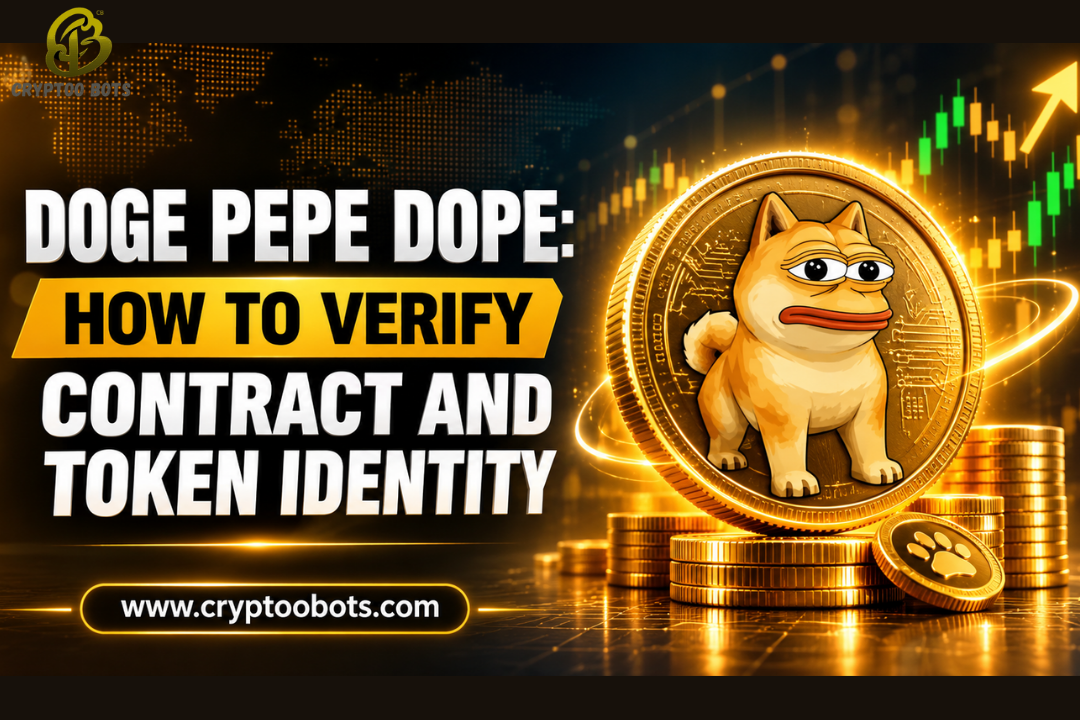
The growing popularity of meme coins has made token verification an essential step for cryptocurrency investors. Doge Pepe DOPE is one example where extra caution is necessary because multiple tokens use the same name or DOPE ticker across different blockchain networks.
Public listings show Doge Pepe-themed tokens on Ethereum, Solana, and Robinhood Chain. However, these assets have different contract addresses or mint addresses, supplies, and holders. Sharing the same ticker does not mean they belong to the same project.
Before purchasing or transferring Doge Pepe DOPE, investors should identify the correct blockchain, obtain the official token address from verified project sources, and confirm its details through a blockchain explorer.
This guide explains how to verify the Doge Pepe DOPE contract address, examine token information, identify potential copycat tokens, and avoid common cryptocurrency scams.
What Is Doge Pepe DOPE?
Doge Pepe DOPE is a meme coin-themed cryptocurrency inspired by two recognizable internet characters: Doge and Pepe.
Like many meme coins, its popularity is connected to internet culture, online communities, and speculative cryptocurrency interest. However, the name has also been used by multiple token deployments across different blockchain networks.
Some versions appear on Ethereum, others use Solana token mint addresses, while additional listings reference Robinhood Chain.
This creates an important challenge for investors. Searching for Doge Pepe DOPE may produce several token listings that look similar but represent completely different digital assets.
Therefore, investors should not assume that every cryptocurrency displaying the DOPE ticker is an official version of the same project.
The safest approach is to treat Doge Pepe DOPE verification as a token identity check rather than relying on its name, logo, market listing, or promotional claims.
Why Is Verifying the Doge Pepe DOPE Contract Address Important?
A cryptocurrency’s actual identity is established by its blockchain address, not simply its name or ticker symbol.
Anyone with the necessary technical knowledge can deploy a token using a familiar name and symbol. This makes it relatively easy for malicious developers or unrelated projects to create copycat tokens that resemble established meme coins.
For example, multiple tokens can display the name Doge Pepe and use the DOPE ticker while having entirely different smart contracts.
Buying the wrong token can expose investors to several risks, including:
- Fake token purchases: Investors may accidentally purchase an unofficial copy rather than the intended cryptocurrency.
- Malicious smart contracts: Some contracts contain functions that can restrict transfers or create other unexpected risks.
- Wallet security threats: Interacting with suspicious contracts or signing unknown approvals can expose wallet assets.
- Liquidity problems: Fake or poorly designed tokens may have little trading liquidity, making it difficult to sell holdings.
- Misleading project information: Copycat websites and social accounts may use familiar branding to attract unsuspecting buyers.
Understanding how smart contracts work is therefore essential when researching unfamiliar cryptocurrency projects.
A verified contract does not automatically guarantee that a token is legitimate or safe. It only helps users inspect the published contract code and compare its information with other available sources.
How to Verify the Doge Pepe DOPE Contract Address
Verifying a DOPE token requires checking several details in the correct order. The process is similar across different blockchain networks.
Step 1: Find the Official Project Website and Social Accounts
Start by identifying the project’s official communication channels.
Look for its official website, verified social media profiles, and published documentation. These sources should clearly identify the blockchain network and provide the relevant token contract or mint address.
Avoid copying addresses from random Telegram messages, promotional posts, comments, or unofficial cryptocurrency groups.
Step 2: Copy the Complete Contract Address
Once you locate the official token address, copy the entire address.
Do not rely on only the first and last few characters. Scammers sometimes create addresses that look similar to legitimate ones, hoping users will overlook the differences.
Always compare the complete address before making a transaction.
Step 3: Open the Correct Blockchain Explorer
Paste the address into the appropriate blockchain explorer.
Popular options include:
- Ethereum: Etherscan
- Solana: Solscan
- Robinhood Chain: Use its supported official blockchain explorer.
Make sure the explorer corresponds to the network identified by the project.
An address displayed on one blockchain should not automatically be treated as the same token on another network.
Step 4: Compare the Token Information
After opening the address, review the available token information.
Important details include:
- Token name
- Ticker symbol
- Contract or mint address
- Decimal configuration
- Total token supply
- Holder distribution
- Transaction activity
Compare these details with the information published through official project channels.
If the information does not match, stop and investigate before interacting with the token.
Important: Doge Pepe DOPE contract verification is only meaningful when the address and blockchain network match. A familiar token name alone is not sufficient proof of authenticity.
Which Blockchain Networks Support Doge Pepe DOPE?
One of the biggest challenges when researching Doge Pepe DOPE is that similar token listings appear across multiple blockchain networks.
Ethereum, Solana, and Robinhood Chain use different token identification systems. Investors must understand these differences before checking an address.
1. Ethereum
Ethereum-based tokens generally use smart contract addresses and commonly follow standards such as ERC-20.
These contracts define important token functions, including transfers, balances, and supply-related information.
Investors can use Etherscan to inspect Ethereum token contracts, transaction histories, and holder information.
Official documentation: https://ethereum.org/en/developers/docs/standards/tokens/
2. Solana
Solana uses a different token system.
Instead of the traditional Ethereum-style contract address, an SPL token is identified through its mint address.
Solana’s token programs manage important details such as token supply, decimals, mint authority, and freeze authority.
Solscan can help investors examine token information and transaction activity on the Solana network.
3. Robinhood Chain
Robinhood Chain uses an Ethereum-compatible architecture, meaning token contracts can follow familiar Ethereum-style standards.
However, investors must use the correct network and its supported explorer when checking a token.
A contract address associated with Robinhood Chain should not automatically be assumed to represent an identical asset on Ethereum.
Key takeaway: Always identify the blockchain first. The same DOPE ticker across different networks can represent separate cryptocurrency projects with different token supplies, holders, and risks.
How to Check DOPE Token Supply, Holders, and Liquidity
After identifying the correct token address, the next step is examining its on-chain activity.
A matching contract address is only the beginning of the research process. Investors should also understand how tokens are distributed, whether additional tokens can be created, and how much liquidity is available.
1. Examine Total and Circulating Supply
Check the token’s total supply and compare it with the circulating supply reported by the project.
A significant difference between these figures may indicate that some tokens are reserved, locked, or held in wallets that are not currently circulating.
Investors should understand these allocations before making assumptions about the token’s market capitalization.
2. Review Token Holder Distribution
The number of holders does not necessarily indicate healthy token distribution.
Check whether a small number of wallets control a substantial percentage of the available supply.
Concentrated ownership can create risks because large holders may sell significant quantities of tokens, potentially increasing selling pressure.
Also, remember that exchange wallets, liquidity pools, and project treasury addresses can influence holder statistics.
3. Check Mint and Freeze Authority
For Solana-based DOPE tokens, mint authority and freeze authority deserve particular attention.
- Mint authority: Determines whether additional tokens can be created.
- Freeze authority: Can allow an authorized account to freeze token accounts.
An active mint authority means the token supply may increase if additional tokens are issued.
A revoked authority can reduce certain risks, but it does not establish that a project is trustworthy.
4. Investigate Liquidity Pools
Liquidity determines how easily investors can buy or sell a cryptocurrency without significantly affecting its market price.
Review the available trading pairs, liquidity pool size, and the wallets or entities providing liquidity.
Also investigate whether liquidity is locked, subject to restrictions, or controlled by a small number of participants.
Low liquidity can result in substantial price fluctuations and difficulty executing trades.
5. Analyze Transaction History
A token’s transaction history can reveal useful information about its activity.
Look for:
- Large transfers between wallets.
- Unusual buying and selling patterns.
- Concentrated token movements.
- Sudden changes in holder balances.
- Suspicious or repetitive transactions.
These indicators do not automatically establish fraudulent activity, but they can help identify unusual behavior that requires further investigation.
Investors should also look for independent security reviews and understand what an audit actually covers.
How to Identify Fake or Duplicate DOPE Tokens
Copycat tokens are a common concern in the meme coin market. Fraudulent projects may use familiar names, logos, and ticker symbols to create the appearance of legitimacy.
Here are some warning signs to watch for when researching Doge Pepe DOPE.
Same Ticker but Different Contract Address
One of the most common tricks involves creating a token with the same name and ticker as another cryptocurrency.
For example, two tokens may both display DOPE, but their contract addresses are completely different.
A matching ticker does not prove that either token is connected to the same development team.
Unofficial Websites and Social Media Accounts
Scammers sometimes create websites and social accounts that imitate established cryptocurrency projects.
Check account verification, website information, project announcements, and whether the published contract address matches the official token details.
Be especially careful with sponsored links and messages shared through unfamiliar groups.
Pressure to Buy Immediately
Fake token promotions often use urgency to encourage rushed decisions.
Messages may claim that investors have only a few minutes to purchase tokens or that an exclusive opportunity will disappear soon.
Legitimate research should never require investors to skip contract verification.
Unrealistic Return Promises
Guaranteed profits, extremely high returns, and claims of risk-free meme coin investments are major warning signs.
Cryptocurrency prices are volatile, and no promotional message can guarantee future performance.
A duplicate token is not necessarily fraudulent, but it should always be treated as a separate digital asset unless its connection to the original project can be independently established.
What Should Investors Check Before Buying or Transferring DOPE?
Before interacting with a Doge Pepe DOPE token, investors should complete a basic security checklist.
- Confirm the blockchain: Identify whether the token operates on Ethereum, Solana, or Robinhood Chain.
- Verify the official address: Obtain the complete contract or mint address from trusted project channels.
- Use the correct explorer: Check the address on the appropriate blockchain explorer.
- Compare token details: Verify the name, ticker, decimals, and supply.
- Review holder distribution: Investigate whether ownership is concentrated among a few wallets.
- Inspect token permissions: Check mint and freeze authorities where applicable.
- Evaluate liquidity: Examine available trading pairs and liquidity conditions.
- Check transaction history: Look for unusual transfers and suspicious activity.
- Avoid unknown wallet approvals: Never sign transactions you do not understand.
- Test carefully: If making a transfer, consider starting with a very small amount after independently verifying the destination and network.
Never trust a contract address simply because someone shares it in a private message or cryptocurrency discussion group.
Common Mistakes When Verifying Meme Coin Contracts
Even experienced cryptocurrency users can make mistakes when researching newly launched meme coins.
Some of the most common errors include:
1. Trusting the Ticker Symbol
A ticker such as DOPE is not unique. Multiple projects can use the same symbol, so always verify the full token address.
2. Ignoring the Blockchain Network
An address must be checked on the correct blockchain. Looking at the wrong network can lead to incorrect conclusions about token identity.
3. Assuming a Verified Contract Is Safe
A verified smart contract allows users to inspect its published source code. It does not guarantee that the project is legitimate, secure, or free from malicious features.
4. Ignoring Token Supply
Investors who overlook token distribution and supply-related permissions may underestimate potential dilution or selling pressure.
5. Focusing Only on Holder Numbers
A large holder count does not necessarily mean a cryptocurrency has a healthy investor base. Distribution and wallet concentration are equally important.
6. Overlooking Liquidity Risks
A token may appear attractive on a tracking platform but still have insufficient liquidity for investors to exit their positions efficiently.
Avoiding these mistakes can help investors make more informed decisions when researching Doge Pepe DOPE and other meme coins.
Final Thoughts: Always Verify Doge Pepe DOPE Before Investing
Doge Pepe DOPE highlights an important issue in the cryptocurrency market: a familiar token name does not necessarily represent a unique or authentic digital asset.
Multiple tokens can use the DOPE ticker across Ethereum, Solana, and Robinhood Chain. Each may have its own contract or mint address, token supply, holder distribution, and liquidity conditions.
For this reason, investors should never rely exclusively on token names, logos, social media promotions, or third-party listings.
The safest approach is to identify the correct blockchain, obtain the complete token address from verified project channels, and independently inspect it through the appropriate block explorer.
Checking token supply, holder distribution, mint permissions, liquidity, and transaction history provides additional information about potential risks.
Ultimately, the contract address and blockchain network establish token identity, while independent research helps investors evaluate its risks.
Before buying or transferring Doge Pepe DOPE, take the time to verify every detail. A few minutes of research can help prevent costly mistakes in the highly speculative meme coin market.
Disclaimer: This article is intended for informational and educational purposes only and does not constitute financial, investment, or legal advice. Meme coins are highly volatile and may involve significant security, liquidity, and fraud risks. Always conduct independent research and verify token information through official project sources and blockchain explorers before purchasing or transferring cryptocurrency.