admincb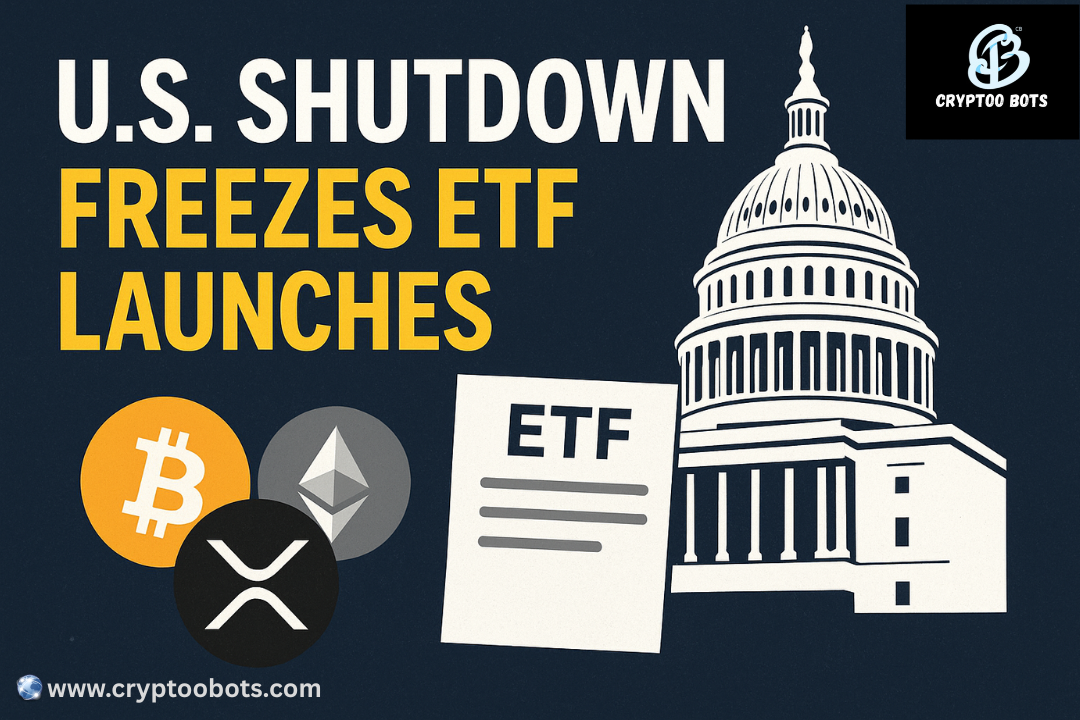
At midnight on October 1, 2025, the U.S. federal government entered a shutdown after Congress failed to passor agree to a new spending bill or continuing resolution. As well As, Many federal agencies have been forced to furlough nonessential staff and scale back operations, affecting regulatory, oversight, and administrative functions across a broad spectrum.
The Securities and Exchange Commission (SEC)
Which is funded by congressional appropriations (at least in part), is among the agencies deeply impacted. However, It has placed more than 90% of its workforce on furlough, retaining a skeleton staff to handle only essential and emergency operations (such as market surveillance or enforcement issues).
Also, In practice, this means that many normal functions of the SEC including reviewing corporate filings, registration statements, and ETF applications have been suspended or severely delayed.
Why the Shutdown Matters for Crypto ETFs
1. Regulatory Bottleneck & Suspended Reviews
Moreover, One of the most immediate consequences is that pending ETF applications are stuck in limbo. Many crypto-related ETF proposals (spot and altcoin ETFs) anticipated decisions this month; Although, those review processes are now effectively frozen until the SEC returns to full staffing.
For example:
- Solana-focused ETFs filed by firms like Fidelity, Franklin Templeton. And Invesco were expected to be acted upon by the SEC soon. But those decisions have been delayed.
- XRP-based ETFs also face uncertainty: issuers have filed amended S-1 registration statements in preparation. But final SEC approval is stalled until full operations resume.
- Even Cardano (ADA) ETF prospects which many expected to be decided by year-end under recent fast-track. Rules are at risk of being pushed into 2026 due to the delay.
In short: the SEC now lacks the personnel to meaningfully review, comment on, or advance these filings.
2. Missed Deadlines & Expired Decision Windows
As well, Some ETF proposals operate on statutory or regulatory deadlines, after which the SEC must act or the application is deemed withdrawn or faces other consequences. With the shutdown, those clocks may expire while the SEC is disabled, which can complicate or invalidate the process.
Similarly, the “rush” many investors expected in October often referred to as an “ETF flood” month is being interrupted. Some applications that had been on track to be approved are now likely to spill over into November or beyond.
3. Market Sentiment & Timing Risks
ETF launches often generate waves of investor interest, capital inflow, and excitement particularly in the crypto space. Delays in approval create uncertainty, which can dampen participation or lead to volatile price moves if expectations shift.
Furthermore, if the shutdown drags on, some issuers might reconsider their timing or strategies. They may delay launches, refile under adjusted terms, or shift capital plans.
4. “Floodgates” Effect Once the Shutdown Ends
So, On the flip side, many analysts and industry observers believe that once the shutdown ends, the SEC will move fast to clear the backlog potentially unleashing a surge of ETF approvals. Some have used the metaphor of “floodgates” opening.
As well, This could lead to a condensed wave of launches in a short window, increasing competition and pushing forward altcoin adoption.
Risks, Opportunities & What Stakeholders Should Watch
Risks
- Extended delay: If the shutdown lasts weeks or more, the backlog becomes more difficult to clear, squeezing the calendar before year-end holidays.
- Regulatory uncertainty: Market participants may start questioning whether some filings will need revision or whether the SEC’s standards could shift during the shutdown period.
- Investor fatigue: Repeated delays may erode confidence among retail and institutional investors in timing projections.
- Missed momentum window: Some tokens or projects banking on ETF-driven capital inflows may lose their “moment” in the market.
Opportunities
- Backloaded approval rush: Once the SEC is back online, a burst of approvals could inject fresh liquidity and excitement into crypto markets.
- Cleaner filings ready to go: Issuers that used the downtime to refine their documentation (e.g. amended S-1s) may be better positioned to move quickly when reviews resume.
- First-mover advantage: Projects that had submitted early and are near completion may be among the first to cross the finish line.
- New narratives: Delays may shift attention to regulatory frameworks, classification debates (security vs non-security), or secondary products (derivatives, ETFs on indices, etc.).
What to Watch
- Congressional resolution: The most critical trigger is when lawmakers reach agreement and restore government funding.
- SEC staffing and backlog strategy: Once funding is restored, how aggressively the SEC reactivates and clears its queue will matter.
- SEC announcements or guidance: Any statements about prioritization, extension of deadlines, or relief for delayed filings would be significant.
- Market reaction: Price movements in affected assets (e.g. SOL, XRP, ADA) may anticipate or reflect sentiment around ETF expectations.
- New proposal filings: Whether issuers delay new filings or push them through during the shutdown (without review) is a signal.
Conclusion
So, The U.S. government shutdown has introduced a significant headwind for crypto ETF approval processes. Although many filings had been poised for action in October, they are now stalled pending return of full regulatory operations. The uncertainty jeopardizes carefully timed launches, tests investor patience, and compresses the calendar available to process approvals.
However, this delay may also concentrate the momentum: once the shutdown ends, there is potential for a rapid burst of approvals and capital flows. Issuers who are ready to go may benefit disproportionately, and the broader crypto ecosystem could see renewed energy. Still, the risk of prolonged delay or shifting regulatory priorities highlights how dependent even decentralized finance is on institutional gatekeepers.