admincb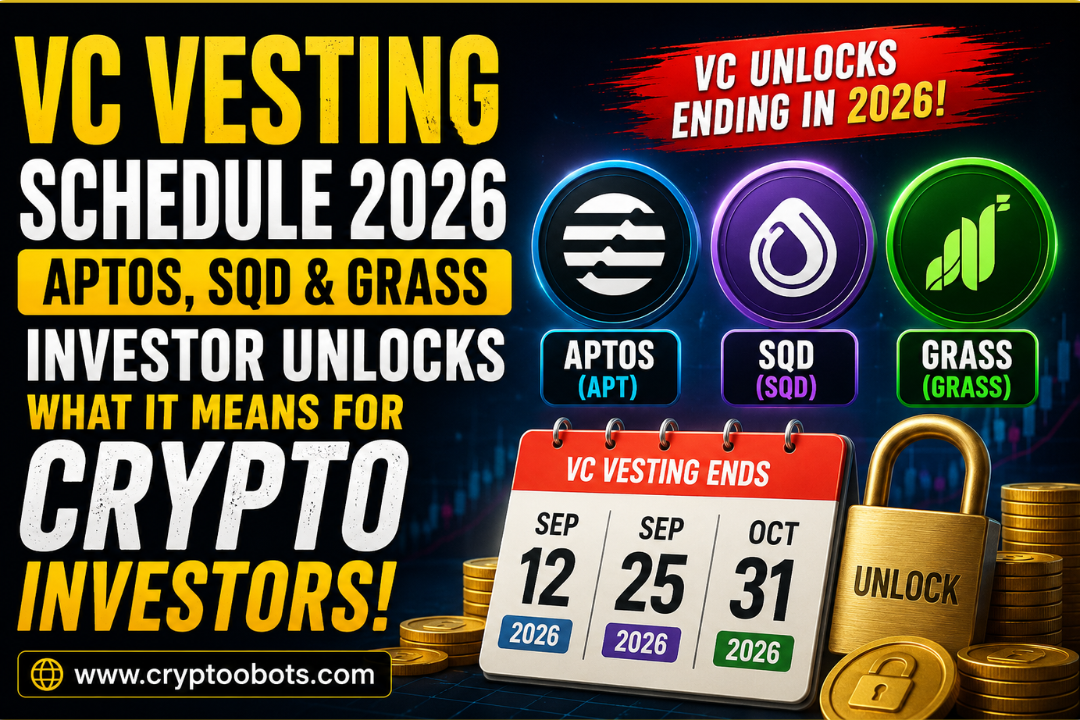
The crypto community often reacts strongly whenever the term “token unlock” appears. Some investors fear a massive sell-off, while others believe it’s a bullish milestone. The reality is usually somewhere in between. Understanding VC vesting schedules can help investors make better decisions instead of relying on social media hype. VC Vesting Schedule 2026
Three notable crypto projects Aptos (APT), SQD, and GRASS are approaching the final stages of their original venture capital (VC) vesting schedules in late 2026. While the exact unlock dates vary slightly based on official tokenomics, each project is expected to complete its investor token releases around the same period.
What Is VC Vesting?
Before launching a token, blockchain projects often raise funding from venture capital firms. In return, these investors receive a portion of the token supply. Instead of receiving all their tokens immediately, they follow a vesting schedule, which gradually unlocks tokens over several months or years.
Most crypto vesting schedules include two phases:
| Phase | Description |
|---|---|
| Cliff | A lock-up period during which no investor tokens are released. |
| Vesting | Tokens unlock gradually, usually every month until the full allocation is distributed. |
For example, if an investor receives 12 million tokens with a one-year cliff and two-year vesting period, they receive nothing during the first year. After that, a small portion of tokens unlocks every month until all tokens have been released.
This approach helps prevent early investors from selling their entire allocation immediately after launch, reducing sudden selling pressure and supporting healthier market conditions.
Why Token Unlocks Matter
Token unlocks increase the circulating supply of a cryptocurrency. If demand remains unchanged, additional supply can create short-term price pressure. However, token unlocks alone rarely determine a project’s future performance.
Many venture capital firms are long-term investors who continue holding their tokens for governance, staking, or future ecosystem growth. As a result, the completion of a vesting schedule doesn’t necessarily mean investors will immediately sell their holdings.
Instead, finishing a VC vesting schedule simply removes one predictable source of recurring token emissions.
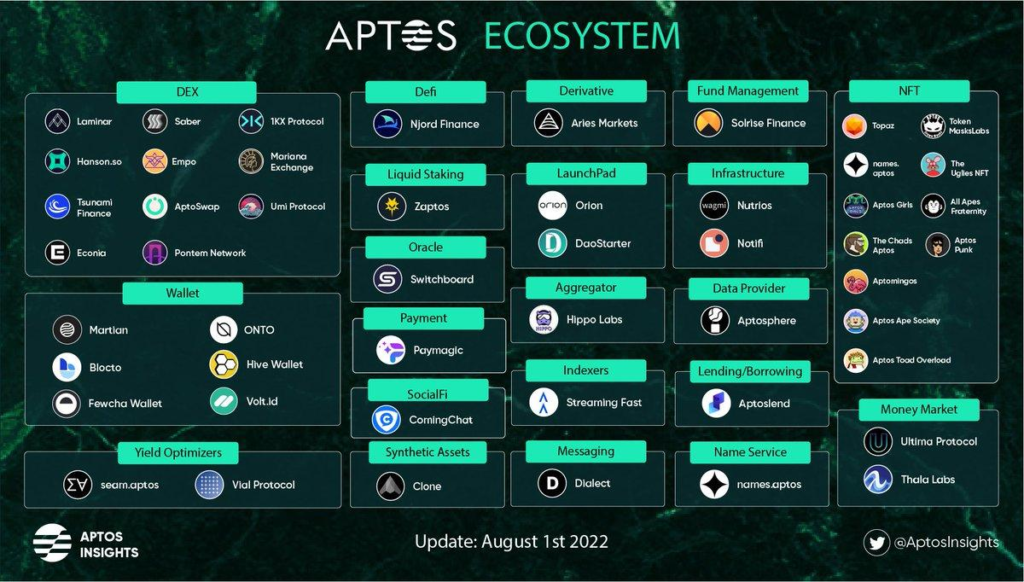
Aptos (APT) Vesting Schedule
Aptos is a Layer-1 blockchain created by former Meta engineers who previously worked on the Diem blockchain project. The network focuses on scalability, security, and high-performance decentralized applications.
When Aptos launched its mainnet in October 2022, investors received 13.48% of the total token supply. Their allocation followed a 12-month cliff followed by 48 months of monthly vesting.
| Allocation | Share | Vesting |
|---|---|---|
| Community | 51.02% | Ongoing |
| Core Contributors | 19% | 1-year cliff + 4-year linear |
| Foundation | 16.5% | 1-year cliff + 4-year linear |
| Investors | 13.48% | 1-year cliff + 4-year linear |
Based on this schedule, the original investor vesting period is expected to conclude around October 2026.
SQD Vesting Schedule
Formerly known as Subsquid, SQD is a decentralized blockchain data network that provides developers with indexed blockchain data across hundreds of networks.
SQD launched its token in May 2024 with a maximum supply of 1.337 billion tokens.
Early investors received approximately 28.3% of the total supply, divided between Pre-Seed and Seed rounds.
| Round | Allocation | Vesting |
|---|---|---|
| Pre-Seed | 12% | 6-month lockup + 24-month linear |
| Seed | 16.3% | 6-month lockup + 24-month linear |
GRASS Vesting Schedule
GRASS, developed by Wynd Network, rewards users for sharing unused internet bandwidth. Companies can access publicly available web data through the decentralized network without collecting users’ personal browsing information.
The project has a fixed supply of 1 billion GRASS tokens.
| Allocation | Share | Vesting |
|---|---|---|
| Early Investors | 25.2% | 1-year cliff + 1-year linear |
| Foundation & Ecosystem | 22.8% | Separate schedule |
| Contributors | 22% | 1-year cliff + 3-year linear |
Since the token launched in October 2024, early investor vesting is expected to end around October 2026.
What Does This Mean for Investors?
The completion of VC vesting is an important milestone because it marks the end of scheduled investor token releases. This can reduce one source of potential selling pressure.
However, it doesn’t guarantee higher prices. Other token allocations including staking rewards, ecosystem incentives, community rewards, and foundation reserves may continue unlocking long after VC vesting ends.
Investors should also evaluate:
- Project adoption
- Developer activity
- On-chain usage
- Trading volume
- Total Value Locked (TVL)
- Market sentiment
- Overall tokenomics
Rather than focusing solely on unlock dates, it’s important to understand the broader fundamentals of each project.
Final Thoughts
Aptos, SQD, and GRASS are all approaching the final stages of their original VC vesting schedules during late 2026. While this removes one predictable source of monthly investor token releases, it should not be viewed as a guaranteed bullish or bearish signal.
Token unlocks are only one part of a project’s tokenomics. Long-term price performance ultimately depends on network adoption, ecosystem growth, investor demand, and overall market conditions.
Disclaimer: This article is for informational purposes only and should not be considered financial advice. Always conduct your own research (DYOR) before investing in cryptocurrencies.